Working Out Troupes for New Players
You’ve read the ‘building a troupe’ guidance; bought, built and painted your troupe; read the rules, cards, guidance, and prepped; then you put your troupe on the table and are faced by something you’ve never encountered before.

Where the moonstones drop is a significant factor in any game. You can read more about this is another article.
Is your troupe automatically going to be weaker? Some meta-type reasons you don’t know about, where your troupe has met its natural hard counter, which will make your game… well… suck?
The short answer is: no. Tom, Joe and all the play testers do a fantastic job of making the game incredibly well-balanced. It’s why you can choose any minis from the same Faction and be able to play them.
The long answer is: it’s a little more complicated. There are some synergies that make a troupe play more smoothly and there are some play styles that cause an opponent more trouble. The way the moonstones fall cannot be underestimated, as this can make a huge difference to the outcome.
Tips on Troupe Choice

“Us Norse stick together!”
While you're learning the game and the tactics, working with a set troupe is a useful way to understand those models well. Over time you’ll be able to identify what they're good at and what they struggle with (including moonstone drops). Then, once you have that down, you'll be in a good place to add a few more models to your lineup.
When you’re choosing your troupe keep in mind:
Characters within a boxset are designed to work well together - for example, you’ll note the two Starter Sets contain four boxsets between them
Those in Monster Boxes (e.g. Giants and Trolls) will typically work with a Faction more broadly, but you should note any keywords that are mentioned in abilities (Gotchgut references Nobles and Goblins for example)
Character keywords (at the top of the card and mentioned in abilities) are a good indication of synergy (e.g. Norse)
The character’s Race (e.g. Goblin) is a good indication of synergy too, but dual Faction characters (e.g. Jobie) are an exception.
Expanding Your Experience
A popular way to play is to make a roster of 8 or 10 characters, and then pick a troupe of 5 or 6 respectively as you deploy for each game. This gives you the chance to bring in models that are good in particular matchups or with certain stone drops or terrain. For example, Commonwealth Soldiers can favour clustered, central moonstone drops, but might want to have a model like Jackalope in reserve who can come in if the stones are very scattered.
While you’re learning how your characters play, you’ll also be learning about other characters and troupes as you play against your opponent(s). You can also download character cards free from the Downloads section, so you can easily try new combinations or opposing troupes yourself to learn further. Tournaments too are an excellent way to learn, regardless of your experience level.
Overall, Moonstone is quick to learn but it takes a while to master (like chess). Moonstone is a fun and good-natured game - it’s fun even when you lose. So learning your own troupes while your friends learn theirs still leads to satisfying games, even if you lose or draw frequently!
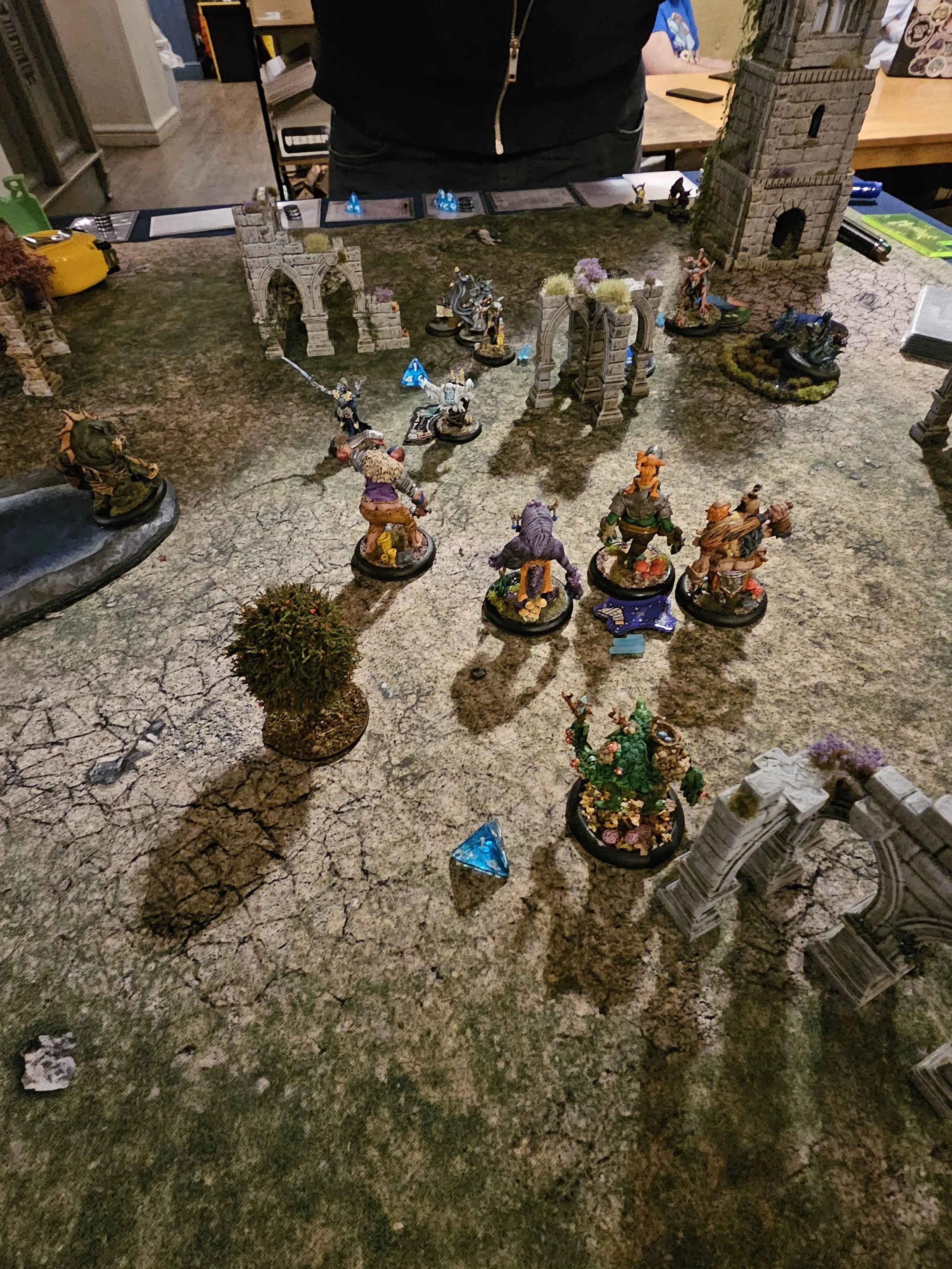
In this game I played Dominion Trolls and Giants against a Shades troupe, purely because I wanted to see how all the big’uns worked. It was an intimidating front and in the end we drew the game, but it was very close. The speed my opponten’s characters could move was the biggest issue for me, particularly as the moonstones were slightly on his side.